This ‘telephone’ has too many shortcomings to be seriously considered as a means of communication. The device is, inherently, of no value. -Western Union internal memo, 1876-
Monthly Archives: August 2026
random quip
You’re the kind of person who would throw a drowning man an anchor.
random quip
When the wise man points at the Moon, the idiot looks at the finger. -Confucious-
random quip
You may fire when you are ready, Gridley. -Commodore George Dewey, USN, 1 May 1898-
From the archives
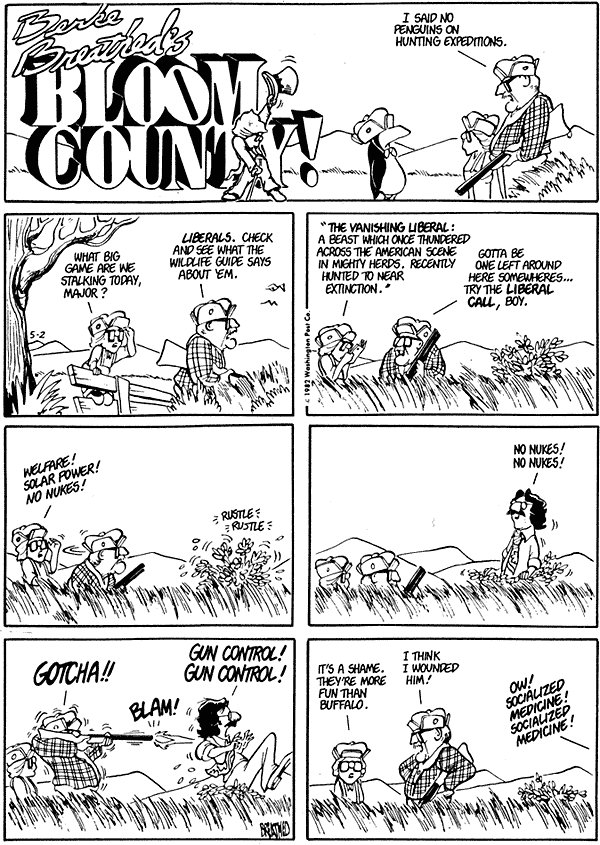
May 2, 1982
random quip
How long will it be before … the man sitting in London will see all things passing in Asia, or whenever it pleases him or an agent to turn a mirror on a view? It will be. Or how long before the discovery of cheap and perfect aerial navigation will change society and annihilate national distinctions? That, too, will be. These and a thousand stranger discoveries will during the ensuing century burst upon the world, changing it utterly. -Charles Godfrey Leland, Gypsy Sorcery and Fortune Telling (1891)-
random quip
One measure of friendship consists not in the number of things friends can discuss, but in the number of things they need no longer mention. -Clifton Fadiman-
random quip
I have traveled the length and breadth of this country, and talked with the best people, and I can assure you that data processing is a fad that won’t last out the year. -The editor in charge of business books for Prentice Hall, 1957-
random quip
One machine can do the work of fifty ordinary men. No machine can do the work of one extraordinary man. -Elbert Hubbard-
random quip
You can have the other words — chance, luck, coincidence, serendipity. I’ll take grace. I don’t know what it is exactly, but I’ll take it. -Mary Oliver-